
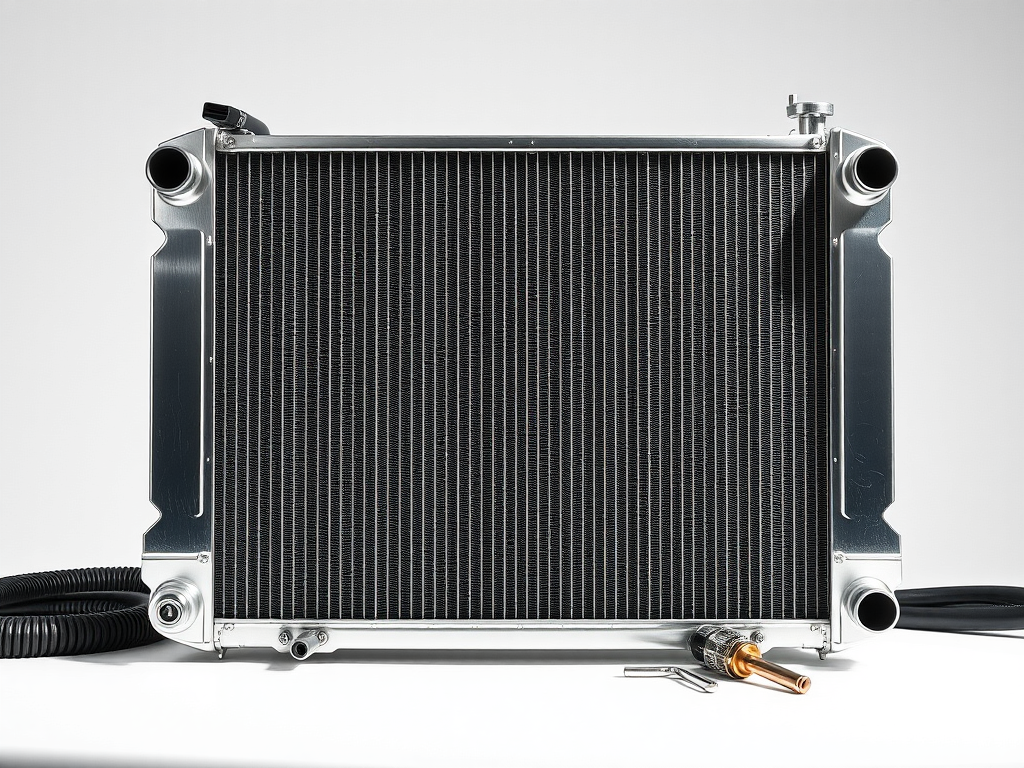
In the realm of automotive engineering, the selection of radiator material is critical, serving as a pivotal factor that can influence vehicle performance, durability, and overall efficiency. Radiators play a fundamental role in vehicle cooling systems, primarily tasked with dissipating heat generated by the engine. By maintaining optimal engine temperatures, radiators prevent overheating, prolonging engine life and ensuring proper functionality. Given their essential role in regulating engine temperature, the materials used in radiator construction are paramount.
Traditionally, radiators were constructed using a variety of materials, including brass and plastic. However, advancements in technology have led to a significant preference for aluminum radiators, particularly in the aftermarket sector. Aluminum, compared to plastic OEM tanks, offers superior heat transfer capabilities, enabling more efficient cooling. This enhanced performance arises from aluminum’s lightweight nature and its excellent thermal conductivity, allowing vehicles to dissipate heat more effectively than those equipped with plastic tanks.
Moreover, the longevity and reliability of the radiator material play a crucial role in its functionality. Plastic components are often susceptible to cracking and degradation over time, especially when exposed to high temperatures and stress. In contrast, aluminum exhibits improved resilience, reducing the likelihood of failure and enhancing the overall lifespan of the radiator. This comparison sets the foundation for further exploration into the benefits of full aluminum radiators, especially for performance enthusiasts and those seeking to upgrade their vehicle’s cooling system.
The Composition Difference: Aluminum vs. Plastic
When comparing full aluminum radiators to those with plastic OEM tanks, the choice of materials is a crucial factor that directly impacts performance and durability. Aluminum is well-known for its excellent thermal conductivity, which allows for efficient heat dissipation. This characteristic is particularly important in the context of automotive cooling systems, where maintaining optimal engine temperature is essential for performance and longevity. By comparison, plastic materials, often used in OEM radiator tanks, exhibit significantly lower thermal conductivity, potentially leading to higher operating temperatures and reduced efficiency.
Durability is another area where aluminum outshines plastic. Aluminum radiators are resistant to corrosion and can endure the stresses associated with high-pressure environments. This resilience is vital, as engine compartments expose radiators to extreme conditions. In contrast, plastic can be susceptible to cracking, warping, or leaking under thermal stress. Over time, exposure to high temperatures may weaken plastic components, leading to premature failure and requiring costly replacements. Aluminum’s robust nature contributes to a longer lifespan for radiators, making it a preferred choice for high-performance applications.
Resistance to heat and pressure is another critical attribute where aluminum surpasses plastic. Aluminum can withstand significantly higher operating temperatures, ensuring reliable performance in diverse driving conditions. Additionally, aluminum exhibits superior pressure tolerance. When an engine operates, the coolant system encounters varying pressures, and aluminum’s ability to resist deformation under such conditions can prevent failure. This reliability is paramount for those who rely on their vehicles for both daily commuting and more demanding driving situations.
Heat Dissipation: Efficiency of Aluminum Radiators
In automotive design, effective heat dissipation is a critical factor in maintaining optimal vehicle performance, especially in high-demand scenarios such as racing or heavy towing. Aluminum radiators offer superior thermal conductivity when compared to their plastic OEM counterparts. This inherent property of aluminum allows for efficient heat transfer away from the engine and into the atmosphere, thus preventing overheating and enabling engines to operate within their ideal temperature ranges.
Aluminum has a thermal conductivity rate of approximately 205 W/m·K, which significantly surpasses that of plastic, typically ranging around 0.25 to 0.5 W/m·K. This stark difference means that aluminum can absorb and dissipate heat more rapidly, which is particularly vital during intense vehicle operations where heat build-up can lead to detrimental mechanical failures. For instance, in motorsports, where peak performance is necessary for success, aluminum radiators ensure that even under extreme conditions, such as high RPMs and prolonged accelerations, the engine remains cool and efficient.
Furthermore, aluminum radiators are also effective in everyday driving scenarios. An aluminum radiator can withstand higher coolant temperatures due to its robust construction and thermal efficiency, leading to consistent engine performance. In urban environments where stop-and-go traffic is commonplace, the ability of aluminum to expel heat quickly can prevent issues like engine knock, which may occur when engine temperatures exceed safe limits.
In summary, the superior thermal conductivity of aluminum makes it the preferred choice for radiators. Its efficiency in heat dissipation plays a crucial role in maintaining vehicle performance across a variety of driving scenarios, solidifying the argument for choosing aluminum radiators over traditional plastic tanks.
Durability and Longevity: Aluminum’s Edge
When evaluating the durability and longevity of automotive components, particularly radiators, the materials used significantly influence performance. In the ongoing debate about aluminum radiators versus plastic OEM tanks, aluminum emerges as the clear winner in terms of lifespan. Various studies have shown that aluminum radiators can withstand greater mechanical stress and higher temperatures compared to their plastic counterparts.
Plastic tanks are susceptible to cracking and degradation over time, particularly when exposed to extreme heat or fluctuating environmental conditions. According to a study published in the Journal of Automotive Engineering, plastic components exhibited a 30-50% higher failure rate when subjected to thermal cycling, which is common in most vehicle operations. In contrast, aluminum radiators demonstrated minimal wear, showcasing their ability to maintain structural integrity in high-temperature environments.
Furthermore, aluminum is inherently resistant to corrosion, particularly in environments that may be chemically aggressive. A comparison study conducted by the Society of Automotive Engineers found that aluminum radiators maintained performance levels significantly longer in corrosive atmospheres found in some industrial applications. Specifically, aluminum components showed a corrosion resistance improvement of up to 60% over plastic materials.
Consideration of thermal conductivity is also pertinent; aluminum’s superior heat dissipation properties allow the radiator to operate efficiently at optimal temperatures, further prolonging its lifespan. With a thermal conductivity rating approximately 3.5 times greater than that of plastic, aluminum helps reduce the likelihood of overheating, an issue that can significantly shorten the life of automotive components.
In conclusion, the evidence clearly indicates that aluminum radiators not only outperform plastic OEM tanks in durability and resistance to environmental factors, but they also promise a longer operational lifespan, making them a superior choice for vehicle cooling systems.
Resistance to Leaks and Cracking
In the domain of cooling systems, the integrity of a vehicle’s radiator is essential for optimal performance. The comparison between full aluminum radiators and traditional plastic OEM tanks reveals significant differences in their resistance to leaks and cracking, which can profoundly impact a vehicle’s reliability and maintenance costs.
One of the primary advantages of aluminum radiators is their inherent resistance to leaks. Unlike plastic components, which are prone to degradation due to temperature fluctuations and exposure to various fluids, aluminum offers superior durability. The longevity of aluminum radiators is attributed to their robust construction and resistance to thermal expansion, which minimizes the occurrence of cracks that often lead to leaks. In contrast, plastic tanks can become brittle over time, especially under the strain of high operating temperatures, resulting in compromised seals and increased likelihood of coolant leaks.
The implications of leaks in a radiator are far-reaching. A leak can lead to a decrease in coolant levels, causing the engine to overheat. This overheating can result in severe engine damage, leading to costly repairs or complete engine replacement. Furthermore, a compromised cooling system can diminish overall vehicle performance, resulting in decreased fuel efficiency and increased emissions. The frequent need to top off coolant due to leaks can also add to a vehicle’s maintenance costs, creating a cycle of ongoing repairs and potential breakdowns.
By choosing a full aluminum radiator, vehicle owners invest in a long-lasting solution that significantly reduces the risk of leaks and cracking, ultimately ensuring improved vehicle performance and lower maintenance expenses.
Weight Comparison: Are Aluminum Radiators Heavier?
When considering the performance of vehicle cooling systems, one often contemplates the weight of the components involved. Aluminum radiators, compared to their plastic OEM counterparts, are frequently perceived to be heavier; however, this assumption requires further examination. While aluminum is indeed denser than plastic, the total weight differential between aluminum and plastic radiators can vary significantly depending on design and construction methods.
Aluminum radiators are both lighter and sturdier than traditional plastic tanks typically used in OEM designs. This is largely due to their construction, which allows for the use of thinner materials without compromising structural integrity. Consequently, aluminum radiators can often be designed to achieve weight reductions while enhancing strength and thermal efficiency. This characteristic is particularly beneficial in motorsports and racing applications, where every ounce counts.
Furthermore, the reduced weight of aluminum radiators can contribute to overall vehicle performance by lowering the center of gravity and improving weight distribution. These factors are crucial for vehicles aimed at optimized handling and speed. In high-performance scenarios, racers and automotive enthusiasts seek to minimize weight wherever possible to enhance acceleration and maneuverability.
It is essential to note that while aluminum radiators might be heavier in some instances, advancements in engineering are continuously pushing towards lightweight designs without sacrificing durability. As technology evolves, the construction of aluminum radiators becomes increasingly sophisticated, allowing for more efficient and lighter designs compared to the traditional heavy plastic radiators.
In essence, the potential weight advantage of full aluminum radiators can significantly influence vehicle performance, especially in competitive racing settings, where maximizing efficiency and minimizing weight is paramount.
Cost Effectiveness: Initial Investment vs. Long-Term Savings
When evaluating the performance of full aluminum radiators against plastic OEM tanks, it is essential to consider the cost implications associated with both options. Initially, aluminum radiators may present a higher upfront investment compared to their plastic counterparts. However, this comparison requires a deeper examination of long-term financial advantages. Aluminum radiators are known for their durability and resilience, which translates to a longer lifespan than plastic tanks.
In the automotive industry, the longevity of components plays a vital role in overall cost management. While the initial price of a full aluminum radiator might deter some buyers, the durability it offers can lead to significant savings in maintenance and replacement costs over time. Plastic tanks are more prone to corrosion and damage, often needing replacement every few years, which can accumulate substantial expenses. In contrast, aluminum radiators are engineered to withstand extreme temperatures and environmental conditions, reducing the likelihood of repairs and replacements.
Moreover, aluminum’s thermal conductivity further enhances its effectiveness, providing better cooling performance and efficiency. A well-functioning radiator can contribute to improved fuel economy and engine performance, leading to savings on fuel costs. These benefits highlight how the initial investment in a full aluminum radiator can yield substantial long-term financial returns.
Ultimately, while the higher initial cost of aluminum radiators may require careful consideration, the potential for reduced maintenance expenses and enhanced durability presents a compelling case for their adoption in the automotive market. By investing in a full aluminum radiator, vehicle owners are likely to experience significant savings throughout the lifespan of their vehicle, making it a financially sound choice overall.
Real-World Applications: Case Studies
Over recent years, numerous case studies and testimonials have emerged, illustrating how aluminum radiators offer significant advantages over their plastic counterparts in various automotive applications. Feedback from automotive enthusiasts, professional mechanics, and manufacturers alike underscores the tangible benefits of upgrading to full aluminum radiators.
One prominent example comes from a classic car restoration project where an automotive enthusiast replaced the aging plastic OEM radiator with a high-performance aluminum version. The owner noted a drastic improvement in cooling efficiency during high-demand driving conditions. This upgrade not only enhanced engine performance but also instilled greater confidence during long drives, demonstrating that aluminum radiators can be integral to vintage vehicle maintenance.
Similarly, a mechanic specializing in performance vehicles shared his experiences with upgrades for race cars. He found that vehicles equipped with aluminum radiators consistently maintained optimal operating temperatures, even under extreme conditions. This performance reliability translated into reduced downtime and improved lap times for his clients. His insights highlight that aluminum radiators not only enhance cooling efficiency but can also significantly contribute to vehicle reliability in competitive environments.
Furthermore, a well-known automotive manufacturer recently transitioned their production line to incorporate aluminum radiators in their latest models. Initial reports from users indicated a marked decrease in temperature-related performance issues, particularly in SUVs that are often subjected to heavier loads and towing. As a result, the manufacturer received positive feedback on overall vehicle handling and longevity, showcasing how aluminum radiators can improve user experiences across diverse vehicle types.
These testimonials reinforce the idea that full aluminum radiators outperform plastic OEM tanks through a combination of superior thermal conductivity, durability, and ease of maintenance, making them a preferred choice for a wide range of automotive applications.
Conclusion: Making the Right Choice for Your Vehicle
In today’s automotive world, choosing the right radiator is critical for maintaining optimal engine performance and longevity. The comparison between full aluminum radiators and plastic OEM tanks has emphasized several important factors. First and foremost, aluminum radiators are known for their superior heat dissipation capabilities. This means they work more efficiently to keep engine temperatures in check, reducing the likelihood of overheating under extreme conditions.
Moreover, the durability of aluminum radiators cannot be understated. Unlike plastic OEM tanks, which are prone to cracking and warping over time, aluminum radiators offer robustness and resilience against environmental factors and mechanical stress. This durability often translates into longer lifespans, which can provide significant cost savings concerning replacements and repairs.
Additionally, the overall weight of aluminum radiators contributes to better vehicle handling. Thanks to their lightweight design, they can enhance vehicle performance without compromising structural integrity. This feature is especially appealing for performance enthusiasts looking to maximize their vehicle’s capabilities.
Ultimately, while plastic OEM tanks may be a cost-effective option initially, the advantages of full aluminum radiators present a compelling argument for their use in various vehicles. When selecting the right radiator, vehicle owners should carefully consider their specific needs, including driving conditions, vehicle types, and budget constraints. Investing in a high-quality aluminum radiator could yield significant returns in terms of performance, reliability, and overall vehicle health. Therefore, it is advisable to weigh all these factors before making a final decision, ensuring a well-informed choice that supports the vehicle’s performance and longevity.
 English